Stay Safe While Swimming This Summer Season
Summer means pools and lakes. It also means water that can turn dangerous in seconds. Fun still happens when an adult is watching and the basic safety steps are already in place. The World of Pediatrics wants families to come home from the water with good stories, not an emergency. Learn ways to stay safe while swimming with your children this summer.
Swimming Safety: An adult watching is the first rule
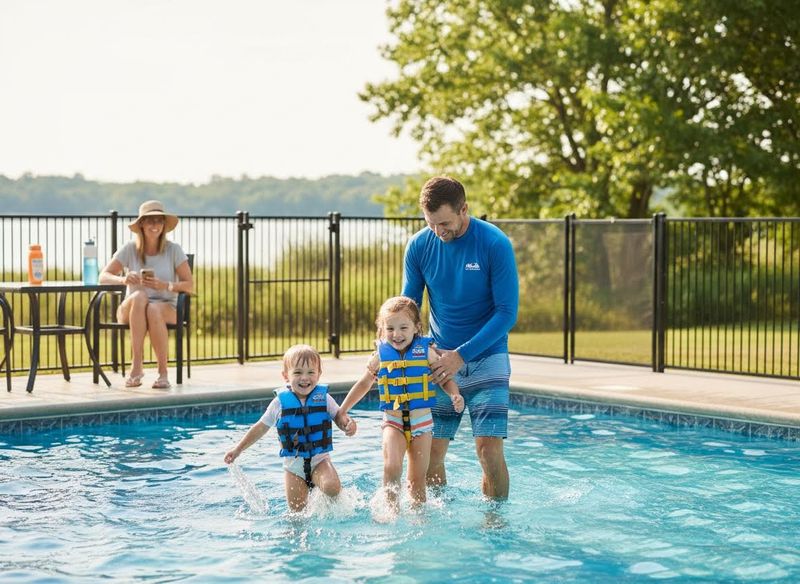
If kids are near water, a grown-up has to be watching them, not the phone. Drowning is often quiet. It can happen faster than it takes to answer a text. Pick one “water watcher” who is not reading, scrolling, or grilling. That person stays within arm’s reach of toddlers and weak swimmers. A lifeguard helps. They do not replace you. That is the same standard we talk about as your Alpharetta pediatrician or Cumming pediatrician.
Assign the job out loud. Trade off every 15 to 20 minutes so no one gets tired or sloppy. If you have to step inside for sunscreen, a snack, or the bathroom, take the child with you or hand the watch to another adult who agrees. Do not leave a child with another child, even a responsible older sibling. Infants and toddlers need “touch supervision,” meaning you can reach them without taking a step. Never mix alcohol with that role. A watcher who is even a little impaired is not a watcher.
Pools, jackets, and CPR
Fence every pool, in-ground or above-ground, at least four feet high. Gates should close and latch on their own so a child cannot wander in when no one is outside. The fence should isolate the pool from the house and the rest of the yard. A house door that opens onto the deck is not a fence. Add a pool alarm and keep toys out of the water when swim time is over. Floating toys invite a curious toddler back to the edge.
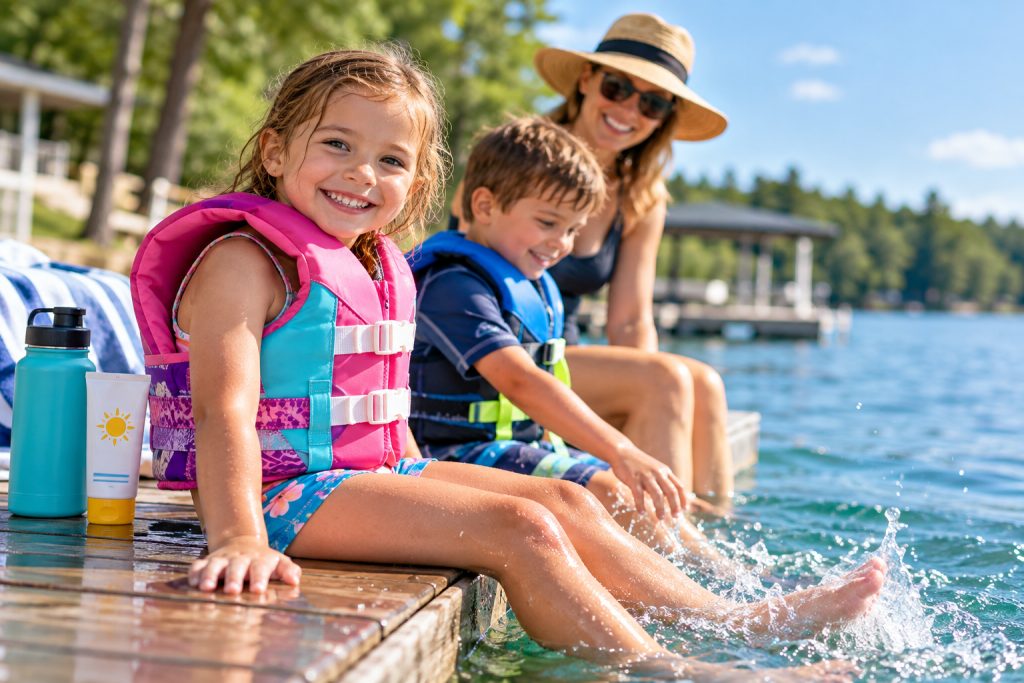
Kids who are not strong swimmers need a properly fitted U.S. Coast Guard-approved life jacket on boats and around open water. Fit matters more than the cute print. Check the weight range on the label. When the jacket is zipped and clipped, lift the child by the shoulders. The jacket should not slide up over the chin or ears. Younger kids do better with a collar for head support and a strap between the legs. Adults should wear jackets too. Kids copy what they see.
Skip water wings, inflatable rings, and pool noodles as safety gear. They can slip off or deflate. They are toys, not life jackets. Get caregivers into a CPR and first aid class. Knowing what to do in the first minute matters. After a drowning, rescue breaths plus chest compressions are the recommended approach once the child is out of the water. Call 911 first if you can do both at once. Practice so your hands know the rhythm before you ever need it.
Sun and water in the bottle
Drowning is not the only summer risk. Use broad-spectrum sunscreen, SPF 30 or higher, and put it on again after swimming or heavy sweat. Rash guards and wide-brimmed hats help. Seek shade from 10 AM to 4 PM. Offer water often, even if they say they are not thirsty. Heat and play drain fluids fast.
A child who is flushed, irritable, dizzy, or unusually quiet may be overheating. Move them into shade, offer small sips, and cool the skin with a damp cloth. If they stop sweating, vomit, or seem confused, that is an emergency. Pack extra water for the ride home. Car seats and hot parking lots finish what the sun started.
Lakes, rivers, and backyard surprises
Open water is not a pool. Depth changes without warning. Currents, drop-offs, murky bottoms, and cold pockets can knock a strong swimmer off balance. Swim in designated areas when you can. Read the flags. Do not dive unless you have checked the depth yourself. Never swim after dark.
Infants and toddlers can drown in a few inches of water. Empty buckets, kiddie pools, and bathtubs as soon as you are done. Close toilet lids. If a child is missing at a gathering, check the water first. Most toddler drownings happen when no one thought the child was near the pool.
Make house rules that travel. Ask permission before anyone enters the water. Walk, do not run, on wet decks. No pushing. No holding heads under. Pick bright swimsuits so you can spot your child in a crowd. Pack the life jackets in the car so you are not borrowing a poorly fitting one at the dock.
Swim lessons help. They do not replace you.
Good summer safety goes beyond the pool. Lessons lower drowning risk and give kids skills and confidence. They do not make a child drown-proof. The American Academy of Pediatrics says lessons can start around age one. Readiness still depends on the child. There is no good evidence that infant classes prevent drowning, though they can be a nice way to get used to the water. Look for certified instructors who teach water safety along with strokes. Ask how they handle fear, fatigue, and kids who freeze. As an Alpharetta pediatrician, we see those early skills pay off.
Lessons fade if they are not practiced. A child who swam well last August may need a refresher in June. Keep going until your child can float, roll, and get to the wall without panic. Even then, the adult on the deck is still the most important layer.
Put the layers together
No single step is enough. Supervision, fencing, jackets, lessons, and CPR work as a stack. One gap is enough for a quiet accident. Watch the water, lock the pool, pack the jackets and sunscreen, and get lessons on the calendar. Talk through the plan with grandparents, sitters, and the friend hosting the cookout. If you want more summer safety guidance for your child, schedule a visit with The World of Pediatrics.
Join Our Family Today
Come see how we practice. Schedule your child’s appointment.