

Protecting Kids from Bug Bites
Learn about summer bug bite safety for kids and simple ways of protecting kids from bug bites. Warm weather means more time outside—and more mosquitoes, ticks, and bees. Most bites are itchy and annoying, but a few may need a doctor’s attention. Parents in Alpharetta, Milton, and Cumming can lower the risk with kid-safe repellent, protective clothing, and a clear plan for what to do when a bite or sting happens.
Stop bites before they start
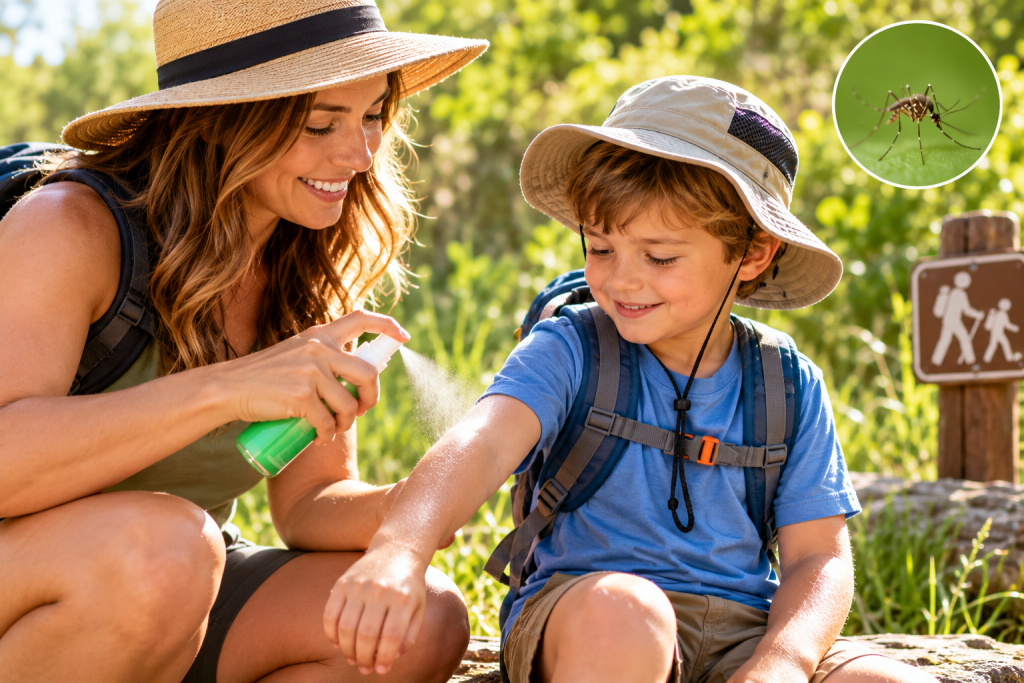
Use a kid-safe insect repellent. The American Academy of Pediatrics recommends products with DEET (up to 30%), picaridin, or oil of lemon eucalyptus. Read the label for age limits. Keep it off hands and faces. Spray it on your own hands first, then dab it onto cheeks and ears. Do not spray near the mouth or eyes and skip the hands of babies who still put fingers in their mouths. Reapply after swimming or heavy sweating, but do not layer it under sunscreen. Put sunscreen on first, then repellent.
Long sleeves and pants help at dawn and dusk, when mosquitoes are busiest. Light colors attract fewer insects than dark ones. Tuck pants into socks for wooded trails and tall grass. A hat with a brim keeps insects off the scalp and neck. Dump standing water around the house so mosquitoes cannot breed. Birdbaths, clogged gutters, plant saucers, and forgotten kiddie pools are common hiding spots. Fix holes in window screens. After time in the woods or on a trail, do a full tick check: scalp, behind the ears, armpits, belly button, waistband, and behind the knees. Ticks like warm, hidden skin.
If they still get bit
Mosquito bites are usually small, red, and itchy. A cool compress, calamine, or over-the-counter hydrocortisone cream often calms them. Trim nails and cover the spot with a bandage at night so scratching does not break the skin.
For a tick, pull it off right away. Use fine-tipped tweezers, grab as close to the skin as you can, and pull straight up with steady pressure. Clean the spot with rubbing alcohol or soap and water. Do not twist, burn, or smother the tick with oil. Save the tick in a sealed bag if you can. Watch for a bullseye rash or other odd rash. That can be a Lyme disease warning. Not every tick carries disease, and not every infection starts with a perfect ring.
Bee and wasp stings hurt. If you see a stinger, scrape it out with a fingernail or a credit card. Do not pinch it. Pinching can squeeze more venom into the skin. Ice helps the swelling and pain. If your child has had a serious sting reaction before, carry the emergency plan your pediatrician gave you and use it without waiting.
When to call the pediatrician
Most bites stay local. Call an Alpharetta pediatrician if you see hives all over, swelling far from the bite, trouble breathing, or dizziness. That is an allergic reaction and needs care now. Redness that spreads, warmth, rising pain, or pus can mean infection. After a tick bite, fever, headache, body aches, or a rash should be checked. A Cumming pediatrician can help rule out tick-borne illness. Early treatment matters.
Prevention plus a simple first-aid plan is enough for most summer days. If a bite looks wrong or your child feels sick after one, use the patient portal or call The World of Pediatrics.
Join Our Family Today
Come see how we practice and experience thoughtful, personalized pediatric care for your family. Call us today and schedule your child’s appointment with our caring team.