
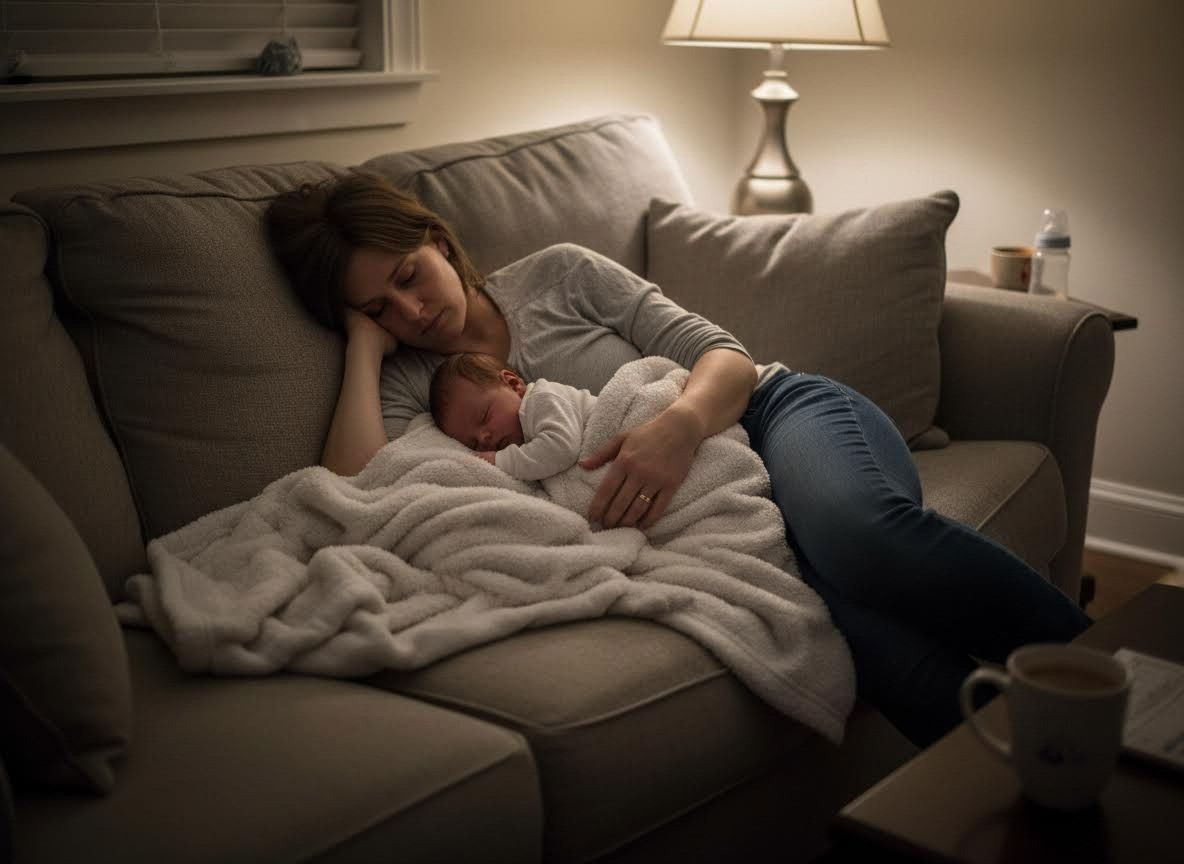
A lot of families choose bed-sharing because it feels like the only thing that works. Especially with breastfeeding. Especially when you are on week three of broken sleep and your brain feels like it is full of static.
If you are an exhausted parent in Milton, GA, the goal of this article is not to scare you. The goal is to help you make an informed decision and avoid the highest-risk scenarios. Let's look honestly at the cons of bed-sharing.
1. Increased Risk of Suffocation and Sleep-Related Death
This is the core issue. Babies can suffocate if their airway gets blocked or if they end up in a position where they cannot breathe well. Adult beds are not designed for infant safety; they have soft mattresses, pillows, comforters, gaps, and other humans who move. You cannot plan your way out of biology and deep sleep phases. Risk factors like smoking, alcohol, drug use, certain medications, couches, and very young infants make bed-sharing dramatically more dangerous.
2. Accidental Co-Sleeping is Often the Most Dangerous Kind
A lot of parents say, “I don’t bed share.” And then they are feeding at night on a couch or in a recliner, close their eyes for a second, and wake up an hour later with the baby on them. Falling asleep with a baby on a couch is widely considered extremely hazardous because babies can get trapped in cushions.
3. Adult Sleep Surfaces are Full of Hazards
Even if you remove the obvious things, adult bedrooms still have risk points:
Mattress softness varies.
Gaps between the mattress and wall are entrapment risks.
Pillows migrate during sleep.
Pets jump up.
Older siblings sneak in.
4. It Can Make Independent Sleep Harder Later
A potential downside of bed-sharing is that the baby gets used to very specific sleep conditions: body warmth, movement, and constant access to comfort. If you later want the baby to sleep in a crib, the change can be rough.
5. Your Sleep Quality Can Get Worse
Some parents sleep lighter, wake constantly, feel tense, and never fully rest while bed-sharing. Over time, that adds up to serious fatigue. Partner sleep can also take a hit, leading to separate rooms and relationship stress.
6. Travel and Childcare Complications
If your baby only sleeps well in your bed, traveling means recreating that environment. Naps at daycare or with grandparents in Milton, GA may become very difficult, and babysitters may struggle at bedtime.
7. Safety Rules Get Harder as Baby Gets Mobile
When babies start rolling, crawling, and pulling up, bed-sharing changes. They can fall off the bed or crawl into dangerous gaps. It is not a "set it and forget it" situation.
Frequently Asked Questions
What are the main risks associated with bed-sharing? The biggest risk is the increased chance of suffocation and sleep-related death due to soft mattresses, pillows, blankets, and entrapment gaps.
Why is accidental co-sleeping particularly dangerous? It often happens when exhausted parents fall asleep while feeding on couches or recliners. These surfaces have deep cushions and gaps where babies can easily get trapped or suffocate.
If you are struggling with a baby who won't sleep independently, the team at World of Pediatrics is here to support you without judgment.